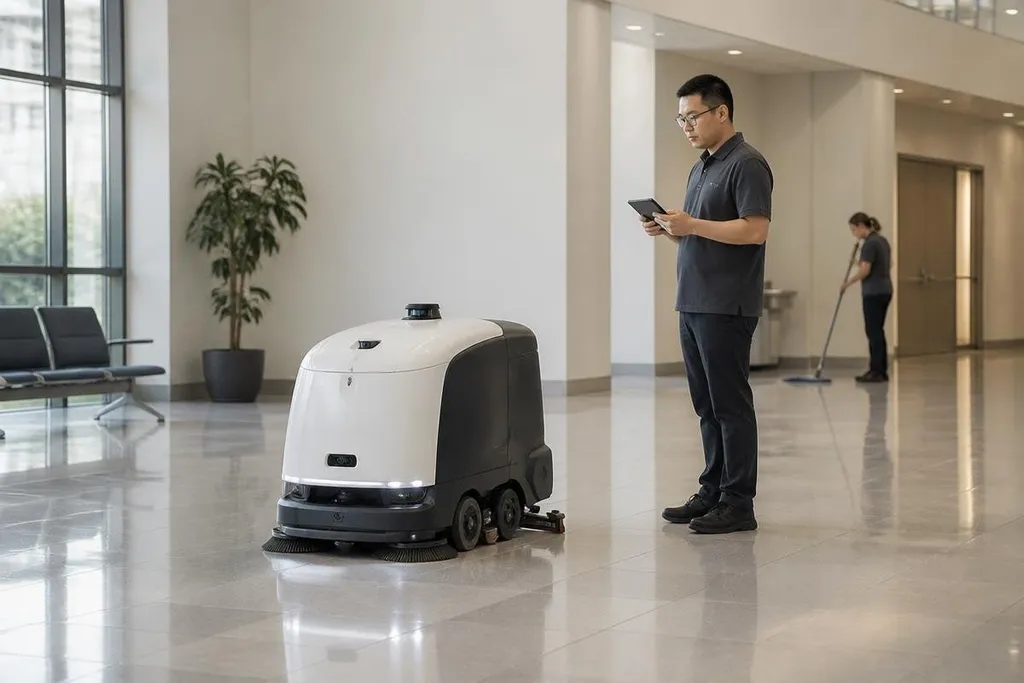
Professional cleaning robots now handle repeat floor work in offices, airports, hospitals, warehouses, and retail sites. Their value comes from doing the same route for hours while cleaning staff focus on rooms, spills, edges, and tasks that need judgment.
Quick read
- Autonomous vacuums and scrubbers can follow mapped routes without constant steering
- Sensors help robots avoid people, walls, stairs, and loose objects
- Staff still handle setup, checks, edges, spills, and areas the robot cannot reach
Where robots fit
The first useful jobs are large, open floor areas with a clear routine. A robot can vacuum carpet, sweep hard floors, or scrub a marked route while a supervisor checks the work and manages the rest of the site.
That changes the staffing problem. The cleaner spends less time walking behind a machine and more time on washrooms, desks, door handles, corners, and surfaces that need close attention. The robot handles repeat movement; the cleaner handles the parts that change from room to room.
Floor scrubbers show the clearest fit. They combine water tanks, brushes, suction, and software that guides the machine across a set area. After mapping, the robot can return to the same zone and report where it worked, stopped, or needed help.
How the machines move
Most cleaning robots use a mix of cameras, LiDAR, bump sensors, and floor or wheel sensors. LiDAR measures distance with light, giving the robot a map of walls, objects, and open paths. Cameras add visual data, while bump sensors help protect the machine when an object is missed.
The software then compares the robot's position with its map. If a chair moves, a person crosses the route, or a door closes, the robot slows, stops, or chooses another path based on the data it receives.
That does not make the robot independent in every setting. A cleaner may need to move cables, open doors, empty a dust bin, refill water, or clear an object that blocks the route. A machine that stops safely still needs a person to get it working again.
What changes for cleaning teams
The job shifts from guiding equipment to managing a work plan. Staff need to set cleaning zones, check reports, inspect the result, and decide when a robot should run again.
Training also changes. A cleaner may need to learn map editing, charging routines, water handling, warning codes, and safe operation around the public. These are practical skills, but they add time before the robot earns its place.
For an operations manager, the useful measure is not how much floor a robot can cover in a product video. Check how often it finishes a route without help, how much manual work remains, and whether the cleaned surface meets the site's standard.
A Robot 24 report can tie a cleaning robot’s route time and human callouts to the site’s floor standard, giving you a way to judge whether the machine cuts labor or shifts it to a supervisor. That evidence belongs beside the purchase price and service plan, because a robot that needs frequent rescue may add work each shift.
I'd buy a cleaning robot only when the site has repeat floor work and a named person who can manage it each shift.
Where robots still struggle
Edges remain difficult. A round or wide machine may leave dust beside walls, under low furniture, around chair legs, or near steps. Those areas still need a person with a smaller tool.
Crowded spaces create another limit. A hospital corridor, airport gate, or shop floor can change every few minutes. People, bags, carts, and wet-floor signs force the robot to stop or take a longer route.
Cleaning quality also depends on setup. A badly placed charging dock, poor map, blocked doorway, or wrong brush setting can turn a repeat task into repeated stops. The machine may complete its route while leaving a result that fails inspection.
Price is only one part of the decision. Add software fees, service, batteries, brushes, filters, cleaning liquid, staff training, and time spent checking the work. A low purchase price can look different once those costs enter the site budget.
Before you buy
Use this checklist before asking for a quote:
- Map the floor: mark stairs, doors, narrow paths, lifts, ramps, and areas that need hand cleaning.
- Count the repeat work: record how many hours each shift goes to vacuuming or scrubbing open floor space.
- Name the operator: assign one person to run checks, refill supplies, clear stops, and review reports.
- Test the surface: confirm that the brush, pad, suction, water flow, and cleaning fluid suit the floor material.
- Price the full term: include service, parts, batteries, software, training, and lost time during repairs.
- Set a pass rule: decide how clean the floor must be and how often a person will inspect it.
The next useful step is a short site trial with a real route, real obstacles, and the same inspection standard used by the cleaning team.
If the robot finishes repeat floor work with few stops and leaves staff enough time for detailed tasks, it has a job; if it needs constant rescue, the site needs a different tool.